How a good bra should fit
Run through these five checks in front of a mirror. If one fails, adjust the size or the style and check again.
Band
The band should sit level all the way around, snug on the loosest hook. It does most of the supporting, so it should feel firm but comfortable.
Try: go down a band size if it rides up.
Cups
Breast tissue should sit fully inside, with a smooth edge and no gaps or spilling.
Try: go up a cup size if you spill.
Underwire
The wire should sit flat against your chest and wrap fully around each breast, not on top of it.
Try: a different shape if it pokes.
Straps
Straps should stay put without digging. They steady the fit but carry far less than the band.
Try: tighten, or check the band size.
Center gore
The middle panel should lie flat against your breastbone without floating.
Try: a smaller cup or a plunge style.
Sister sizes, explained
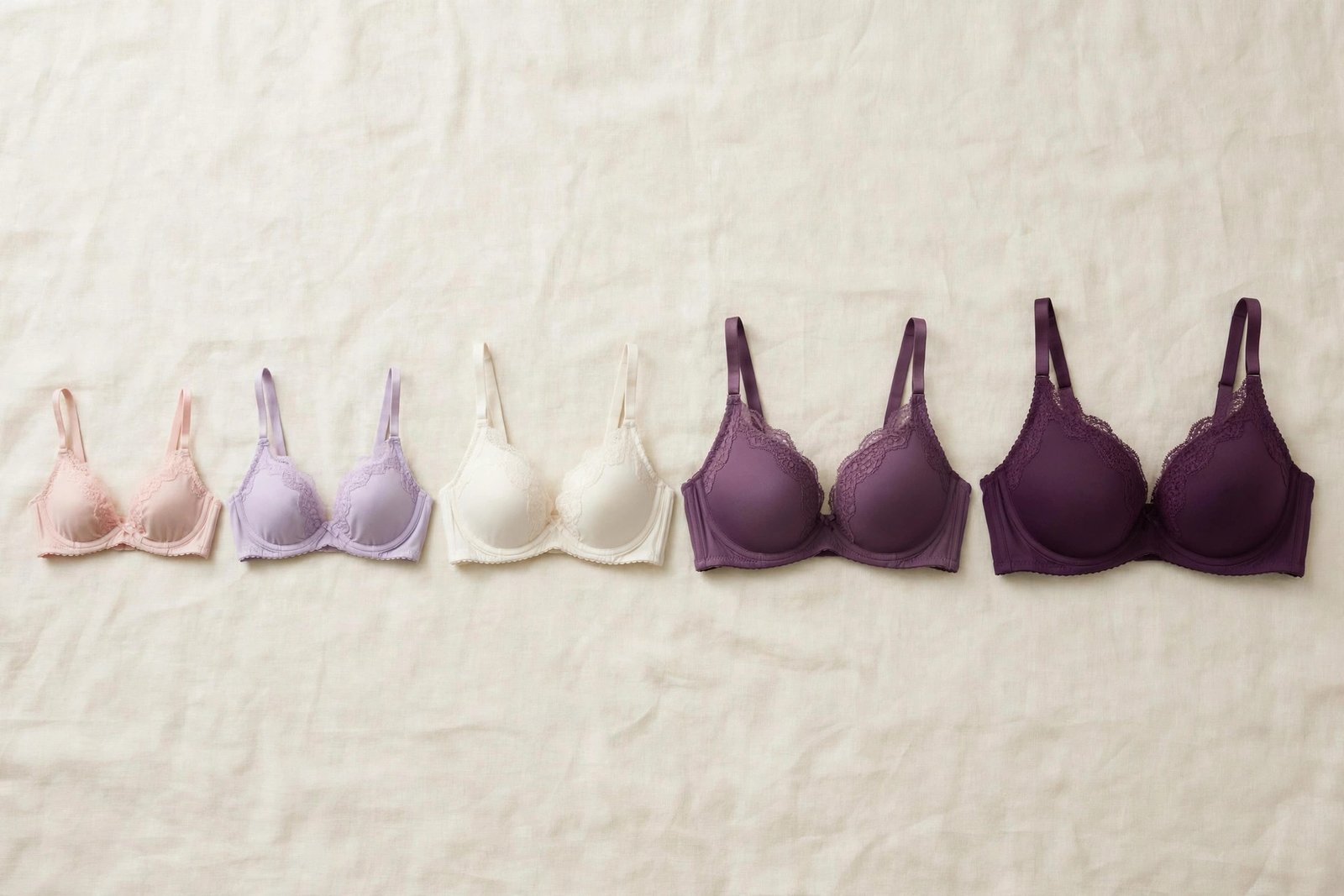
Go up a band size and down a cup size, and the cup volume stays about the same. For example, 34A, 32B and 30C share similar cup volume with different bands.
It is the easiest fix when one part fits and another does not.
Similar cup volume, different bands
When your size changes
Bodies change through life, and so does fit.
Weight changes
Even small changes can move your band size. Re-measure after any noticeable change.
Life stages
Pregnancy, feeding and menopause can all change size and shape. Measure again.
Wear and tear
Elastic relaxes over time. Most bras need replacing once the band stops feeling firm.
Fit FAQ
Which hook should I use?
New bras start on the loosest hook. Move inward as the elastic stretches.
Should the straps do the work?
No. The band should carry most of the support.
How many bras should I own?
Enough to rotate, so each one rests between wears. Three to five everyday bras is plenty for most people.