The best lifting bra for sagging breasts over 50 gives firm support from the band, lift from structured cups, and comfort for sensitive skin. You need a bra holding its shape through the day without digging into your shoulders or riding up your back. This guide covers the features giving lift, the styles working best after 50, and a simple fit check for use in front of a mirror.
Why Breasts Change After 50
Menopause changes breast tissue. Breasts often lose fullness at the top and feel softer. Skin grows thinner and more sensitive. Your old size stops fitting well after these changes.
Weight shifts also change your shape. Fat tissue replaces denser tissue over time. Your band size moves up or down with these shifts. Measure again before you buy a new bra.
Age alone never decides your size. Genetics, weight, hormones, and past pregnancies all shape your breasts. Two women at 55 wear different sizes. Your own measurements matter more than any average.
What Lifts a Bra
The band does most of the lifting work. A firm band sits level around your ribs and stays put through the day. Straps only steady the cups. Tightening straps never fixes a loose band.
Underwire lifts each breast into its own cup. The wire must sit flat against your ribs and wrap fully around each breast. A wire sitting on breast tissue signals a cup too small. Move up one cup size in this case.
Seamed cups add structure and shape. Seams lift from below and separate the breasts. Molded foam cups give a smooth outline with less structure. Seamed cups suit sagging breasts better for lift.
The center gore must touch your breastbone. A gore floating away from your chest signals cups too small. Side support panels push tissue forward from the sides. These panels add lift without adding bulk.
Best Bra Styles for Lift After 50
Full cup bras give steady lift with full coverage. The cups hold the whole breast and lift from below. Wide straps spread weight across your shoulders. Full cup bras suit everyday wear after 50.
Balconette bras lift and round the top shape. Wide-set straps sit farther apart on your shoulders. The cups cradle from below with a lower neckline. Balconette bras work well under square necklines and wider tops.
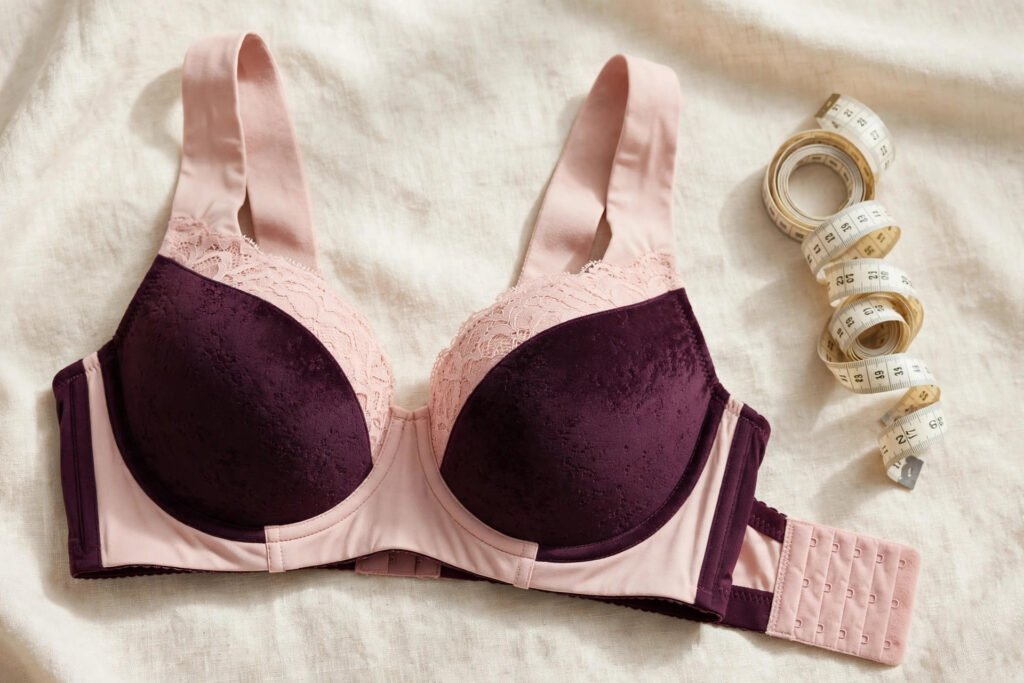
Front closure bras help when reaching behind your back feels hard. The clasp sits at the front between the cups. You fasten the bra in front and adjust once. Front closure bras suit sensitive shoulders and limited mobility.
Wireless bras suit comfort-first days. Look for firm bands, wide straps, and seamed cups in wireless styles. Wireless bras without structure give little lift for sagging breasts. Choose wireless styles with side panels and molded cups for better support.
Find Your Size Before You Buy
Measure with a soft tape in front of a mirror. Wrap the tape snugly around your ribs directly under your bust for your under bust number. Wrap the tape loosely around the fullest part of your bust for your bust number. Write down both numbers and measure twice.
Enter both numbers in the bra size calculator on this site. You receive a starting size in UK, EU, and US sizing plus sister sizes. Sister sizes share the same cup volume on a different band. Try your result and one sister size on each side in the shop.
Your result gives a starting point, never a final answer. Brands cut sizes differently. One brand’s 36C fits like another brand’s 36B. Try sizes on and run the five-point fit check below.
Features to Look For
Wide, padded straps reduce shoulder strain. Padded straps protect skin from pressure marks. Wide straps spread weight across your shoulders. Avoid thin straps for daily wear after 50.
A band with three hooks holds firmer than a two-hook band. Three hooks spread tension across your back. The band must feel snug on the loosest hook when new. Move to tighter hooks as the band stretches over time.
Wide wings on the band add back support and comfort. Wide wings smooth your back line under clothes. Soft, smooth fabric protects sensitive skin. Flexible wires bend with your body instead of poking.
Side support panels push tissue forward. Panels inside the cups add lift from the sides. Look for panels in full cup and balconette styles. Panels help most when breasts sit wide apart.
Features to Avoid
Loose bands ride up your back and drop support. A band riding up signals a band too large. Move down one band size and up one cup size. This sister-size swap keeps the same cup volume.
Stretchy, unlined cups without wires give little lift. Soft cups collapse under heavier tissue. Cups without seams lose shape through the day. Avoid unlined stretch cups when you need lift.
Tightening straps to gain lift strains your shoulders. Straps pulled hard leave marks and cause pain. Lift comes from the band and cups, never from straps. Fix the band size first when straps dig in.
Five-Point Fit Check
Run this check in front of a mirror after trying a bra on. The band sits level and snug, with room for two fingers underneath. The cups hold your whole breast with no gaps and no spill. The wires lie flat against your ribs.
The center gore touches your breastbone. The straps stay in place without digging into your shoulders. All five points must pass together. Move to a sister size when one point fails and test again.
Frequently Asked Questions
What is the best lifting bra for sagging breasts over 50?
A full cup bra with underwire, seamed cups, wide straps, and a firm three-hook band gives the best lift for most women over 50. Balconette bras also lift well under wider necklines. Your exact best style depends on your size and shape. Measure first and try your result plus sister sizes.
Should women over 50 wear underwire bras?
Underwire bras lift better than wireless styles for sagging breasts. Flexible wires bend with your body and stay comfortable through the day. Women with sensitive skin prefer soft wireless styles with firm bands and seamed cups. Choose underwire for lift and wireless for comfort-first days.
How often should you re-measure after 50?
Measure every six months. Measure again after weight change, a new exercise routine, or hormone changes. Your body keeps changing after menopause. A fresh measurement keeps your size accurate.
Do lifting bras work without underwire?
Wireless bras with firm bands, seamed cups, and side panels give moderate lift. Wireless bras without structure give little lift for sagging breasts. Look for molded cups and wide straps in wireless styles. Test the five-point check before you decide.
Find Your Starting Size
Find your starting size with the free bra size calculator. Enter two measurements and receive your UK, EU, and US sizes plus sister sizes. Use the result to pick a size to try on in the styles above.